 Watch Video
Inside the OR with DEXTER® Robotic Surgery System – Interview with Julie Holihan, MD
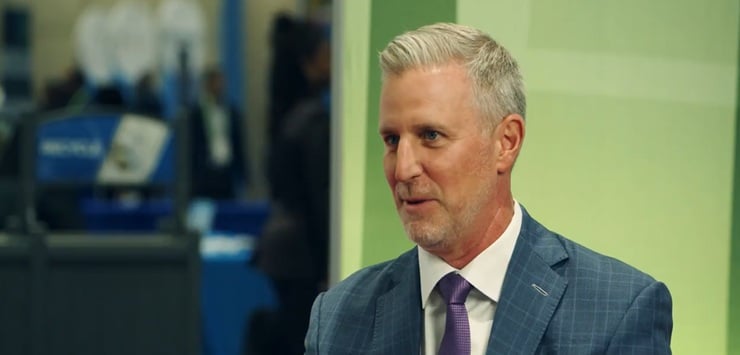
In this interview, Josef de Pfeiffer speaks with Julie Holihan, MD, General Surgeon at UTHealth Houston, about her experience using the DEXTER® System and how it helps address some of the key challenges in her surgical practice. Dr. Holihan also shares her perspective on the learning curve for docking the system and offers broader insights into the future of robotic surgery.
The interview covers:
0:24 Could you please start by providing a background to yourself and how you got started in surgical robotics?
0:52 When did you first start using the DEXTER system and how has your experience been so far?
1:32 How does DEXTER compare to other robotic systems you’ve used?
2:16 What more would you say are some of the biggest challenges you face in your surgical practice and how has DEXTER helped you to overcome them?
2:38 How was your experience with DEXTER incorporating existing visualization staples?
3:08 How has the learning curve been with regards to docking?
3:45 Could you share a specific case where DEXTER has had a meaningful impact on the outcome?
4:09 What would you say excites you the most about the future of surgical robotics?
Click here to learn more about DEXTER.
Video transcript:
00:00:11:04 – 00:00:21:16
Hello, and welcome to Robotic Surgery Insights. I’m excited to be joined today by Julie Holihan, MD, General Surgeon at UTHealth Houston.
00:00:21:18 – 00:00:23:08
Thanks for joining me today.
00:00:23:10 – 00:00:24:17
Thanks for having me.
00:00:24:19 – 00:00:31:00
Could you please start by providing a background to yourself and how you got started in surgical robotics?
00:00:31:02 – 00:00:51:15
So I did a general surgery residency. So I’m a general surgeon, and then I did a fellowship in minimally invasive surgery, which was pretty heavily robotic surgery. So now in my practice, I do mostly hernia and abdominal wall construction and some geriatrics. And I do as much as I can robotically.
00:00:51:17 – 00:00:57:14
And when did you first start using the DEXTER® System, and how is your experience being so far?
00:00:57:16 – 00:01:11:14
So I started using it in April of this year of 2025. My experience so far, it’s been really easy to adopt. I was already pretty facile with other robotic platforms, and so I found this really easy to pick up.
00:01:11:16 – 00:01:19:12
It took probably five cases before I really felt comfortable on it. So the learning curve, I’d say, was relatively short.
00:01:19:14 – 00:01:32:21
In addition, I think this company has done a good job at taking feedback from surgeons, and they’ve incorporated that on things that, you know, we could change or do better. And so, that’s been really, a benefit that I’ve seen.
00:01:32:23 – 00:01:36:10
And how does your experience with DEXTER® compare to some of the other
00:01:36:12 – 00:01:38:00
systems you’ve used?
00:01:38:02 – 00:01:46:06
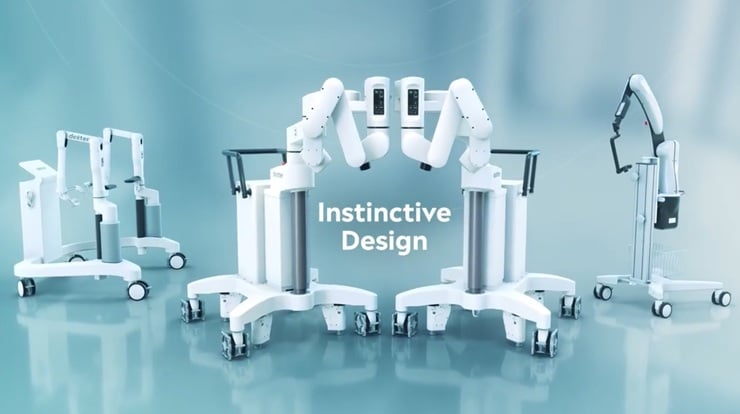
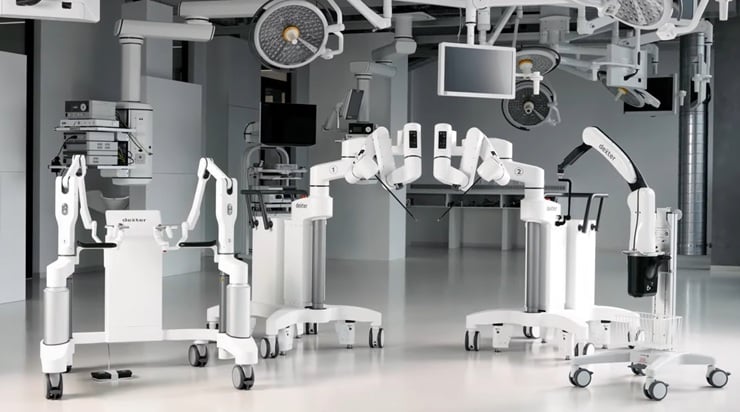
So DEXTER® is smaller than the other robotic system. So the idea is that it can fit in, like, the smaller. Or is that you’ll find at a surgery center.
00:01:46:08 – 00:01:54:20
We have it in our main OR, but even there, it’s just it’s easy to move from room to room. It can really be put anywhere. It fits in any room because it’s very small.
00:01:54:22 – 00:02:15:14
It’s also a sterile. It has a sterile console. So you can go back and forth between the patient bedside and the robot console easily. So if I want to go and put my own in, I can. I don’t have to re scrub because I’m already sterile. And so that’s, it’s a difference that I haven’t seen any other systems, that I find quite beneficial.
00:02:15:16 – 00:02:23:05
And what would you say some of the biggest challenges you faced in your surgical practice, and how has Dexter helped you to overcome them?
00:02:23:07 – 00:02:39:05
One of the challenges is our time, having an hour available with a robot, can be difficult. And so now that we have another system, we have the DEXTER® System. It’s been easier to book cases on that and get cases scheduled for when I want them and when the patients want them.
00:02:39:07 – 00:02:46:07
And how was your experience with DEXTER® incorporating existing visualizations, staplers, etc.?
00:02:46:09 – 00:03:06:17
Well so DEXTER® is different than some other robotic platforms and that you can use whatever system you already have. So we use the screens, we had, the camera we had and it works with what you already have. You don’t have to buy their equipment. They don’t. They just work with whatever is in your hospital already. So that was really very easy.
00:03:06:19 – 00:03:15:04
And how has the learning curve been with regards to docking? As I’ve heard, that docking can be have quite a steep learning curve with, robotic surgery.
00:03:15:06 – 00:03:40:14
So, I would say the docking with this robot is one of my favorite things about it, because it’s very it’s just very simple and for me, I work at a large teaching institution. So I’m with residents and fellows all the time who are rotating on, off and on service who have never seen the system before. And it’s been really pleasantly surprising, like how easy it is to teach them to dock the system.
00:03:40:15 – 00:03:45:12
They can kind of just pick it up. So I think that’s been a huge benefit.
00:03:45:14 – 00:03:51:22
And could you share a specific case where Dexter has had a meaningful impact on the outcome?
00:03:52:00 – 00:04:08:20
Well, like I said, I’ve just used it for inguinal. I’ve never had a bad outcome with it. They’ve all been, you know, all the patients I’ve seen back have been doing well. They’ve all had a nice repair. I haven’t seen a recurrence. I haven’t seen any wound issues. So they’ve all been very positive.
00:04:08:22 – 00:04:13:06
And what would you say excites you the most about the future of surgical robotics?
00:04:13:08 – 00:04:38:22
I think robotics is really it’s changing outcomes in surgery in terms of like there’s fewer wound complications. Patients going out of the hospital faster. I think it’s opening up procedures that we previously had to do open that we can do robotically. So I think there’s a ton of benefits, to patients, doing things robotically. And I think the more robotic platforms we have, really, the better, more options we have.
00:04:39:00 – 00:04:40:09
Brilliant. Well, thank
00:04:40:11 – 00:04:42:02
very much for your time today.
00:04:42:04 – 00:04:42:18
Thank you.