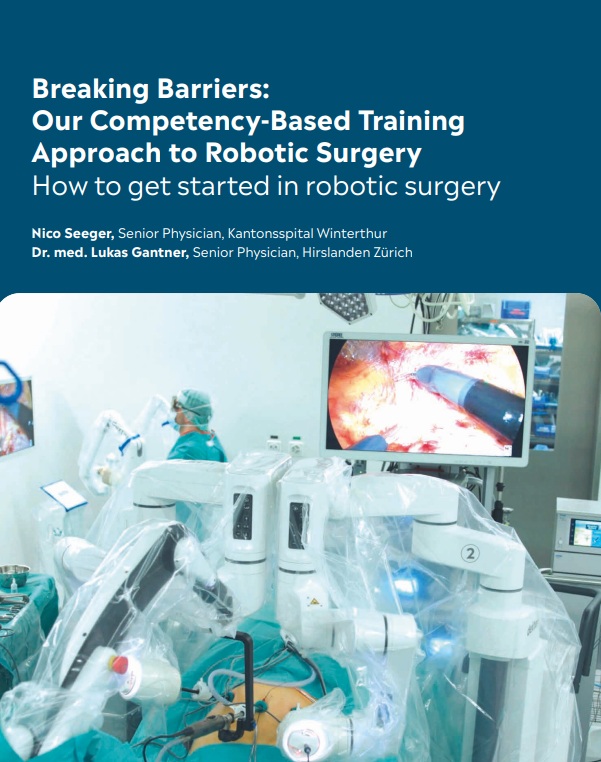
This whitepaper explores the growing role of robotic assisted surgery (RAS) and presents a competency-based training approach designed to help surgeons and healthcare institutions adopt robotic technologies safely and efficiently. Drawing on the first-hand experiences of surgeons who have performed more than 100 robotic procedures, the paper examines the practical challenges of transitioning from conventional minimally invasive techniques to robotic surgery.
As robotic platforms become increasingly common across specialties such as general surgery, gynaecology, and urology, healthcare providers must address challenges related to training, workflow integration, infrastructure, costs, and patient safety. The paper outlines how structured, skills-based training programmes can help overcome these barriers, accelerate proficiency, and support the sustainable growth of robotic surgery programmes.
A key focus of the guide is the implementation of the DEXTER® Robotic Surgery System and the lessons learned from more than 350 robotic-assisted procedures. Through real-world examples, training frameworks, and learning curve data, the paper demonstrates how competency-based training can reduce the time required to achieve proficiency while maintaining high standards of surgical quality and patient care.
Key Topics Covered
- The increasing adoption of robotic assisted surgery across multiple surgical specialties
- Institutional and surgeon-level barriers to robotic surgery implementation
- Infrastructure, workflow, integration, and cost considerations for RAS programmes
- The benefits of competency-based training compared with volume-based learning models
- Learning curve data and surgeon experiences using the DEXTER® Robotic Surgery System
- Tailoring robotic surgery training to different levels of surgical experience
- Simulation, hands-on, video-based, and supervised clinical training methods
- Proctoring, performance metrics, and objective competency assessment frameworks
- Strategies for establishing and scaling robotic surgery programmes within hospitals
- Future directions for robotic surgery training, assessment, and workforce development
Download Distalmotion’s whitepaper to learn how a competency-based approach can support the successful adoption of robotic assisted surgery while improving training efficiency, surgeon confidence, and patient outcomes.