Expanding Revo-i Starts with Education, Experience Sharing, and Continuous Feedback, Says Dr. Jae Seung Kang

- Shares clinical and educational insights through the KSERS Master Class and award-winning research published in JMIS
- “Its capabilities have already been proven. The next step is global expansion and strengthening the user community”
“For Revo-i to be used more widely than it is today, we need an education system that provides medical students and residents with sufficient hands-on experience using Revo-i. This would also reduce hospitals’ reliance on prior experience with a specific robotic platform when recruiting new surgeons. Equally important is actively sharing surgical experience at academic societies and conferences, as well as quickly incorporating user feedback into product improvements.”
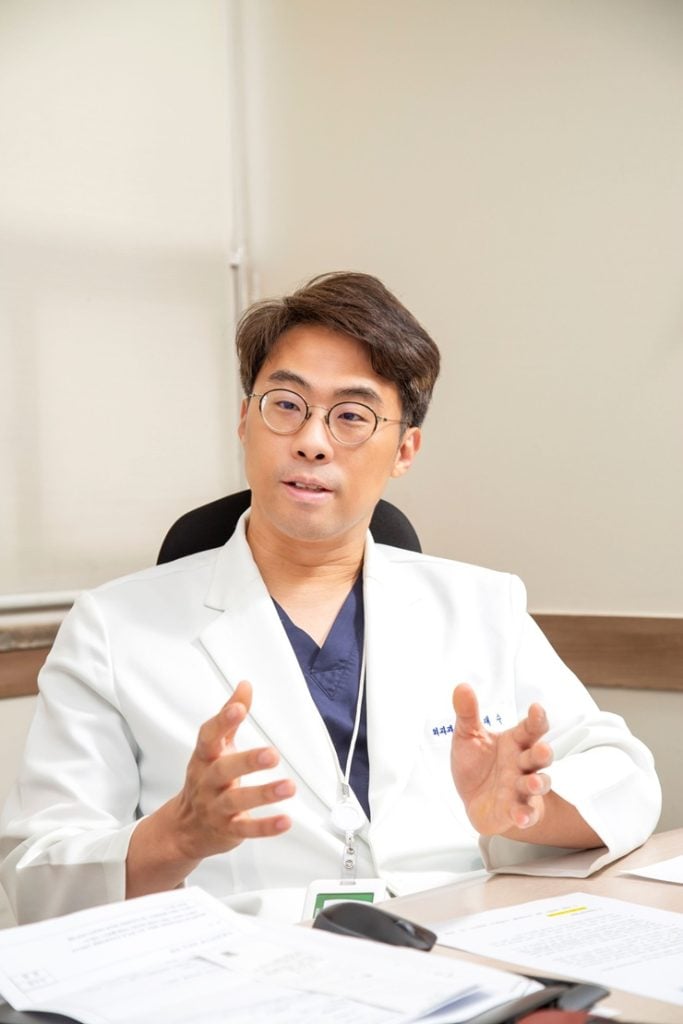
Jae Seung Kang, a surgeon in the Department of Surgery at Hongik Hospital, recently spoke with a reporter about his clinical experience and educational activities using Revo-i, a surgical robot developed by meerecompany. His work spans both clinical practice and surgical education, contributing to the broader adoption of the system.
Most recently, he served as a mentor at the Master Class held during the 58th Annual Congress and 16th International Symposium of the Korean Society of Endo-Laparoscopic & Robotic Surgery (KSERS), where he provided Revo-i surgical training to surgeons from Korea and abroad. The program included hands-on training using anatomical organ models, as well as practical sessions with Revo-Sim, Revo-i’s VR-based surgical simulator.
During the KSERS congress, Kang also received the JMIS Best Paper Award for his research on the clinical outcomes of high-complexity biliary surgery performed using Revo-i. The paper detailed the team’s initial clinical experience using Revo-i for advanced procedures, including choledochal cyst excision with Roux-en-Y hepaticojejunostomy and extended cholecystectomy for gallbladder cancer.
“To date, I have performed approximately 50 surgeries using Revo-i, the majority of which were cholecystectomies,” Kang said. ” We have also performed more complex procedures, including choledochal cyst excision with biliary reconstruction and extended cholecystectomy, with Revo-i. We published these clinical outcomes, and the paper was recognized with the Best Paper Award.”
He added, “Revo-i can be used with an ultrasonic scalpel called Revo SONIC, which enabled us to perform liver transection while simultaneously achieving hemostasis. We confirmed its usefulness in procedures where bleeding control is particularly critical, such as extended cholecystectomy.”
Looking ahead, Kang identified pancreaticoduodenectomy and colectomy as procedures he hopes to perform using Revo-i in the future. “These procedures are performed primarily at tertiary hospitals,” he said. “They are technically demanding, require long operating times, and carry a greater risk of unexpected situations during surgery, making them challenging to perform at secondary hospitals.” He continued, “Even if a robotic system offers excellent capabilities, that does not mean every complex surgery should automatically be performed robotically. It is essential to carefully select patients who are appropriate candidates for robotic surgery. Ultimately, choosing the right cases from the outset is the key to expanding robotic surgery.”
Expanding Revo-i Requires Structured Training for Medical Students and Residents
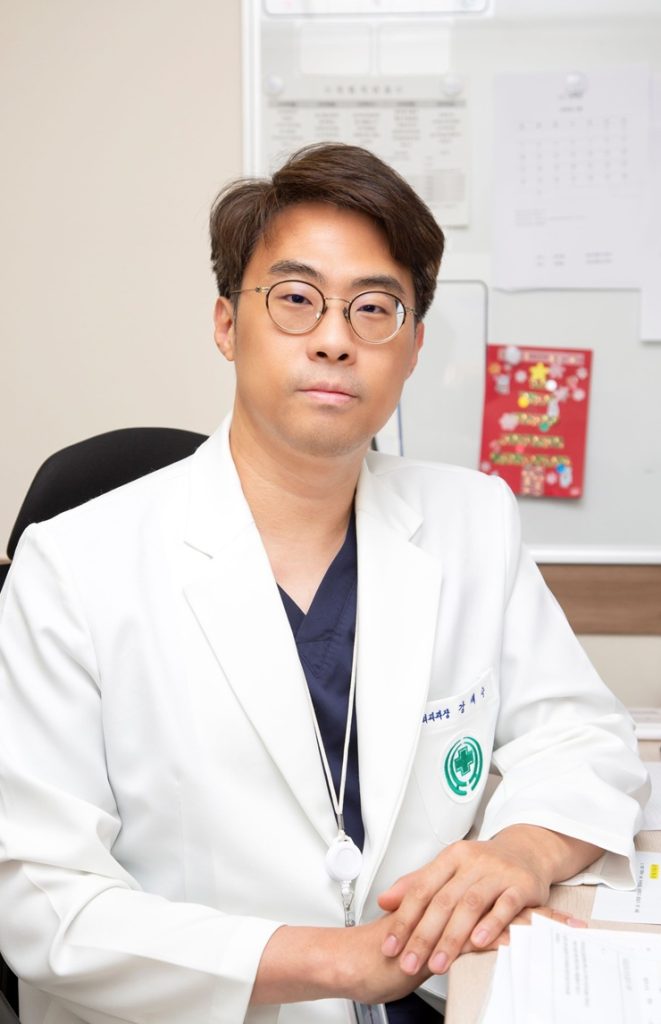
Kang emphasized that establishing a training system that allows medical students and residents to gain hands-on experience with Revo-i will be critical to expanding its adoption.
He explained that prior experience with robotic surgery, particularly with specific platforms, can influence hospitals’ recruitment decisions when hiring surgeons. For that reason, he believes dedicated Revo-i training programs for medical students and residents are essential.
“Revo-i has already demonstrated its capabilities both in Korea and internationally,” Kang said. “Although it is not easy for a new platform to enter a market dominated by established surgical robots, wider adoption will become more achievable if surgeons with Revo-i experience have opportunities to train others and exchange ideas through structured training and discussion programs.”
Kang also stressed the importance of expanding the international adoption of Revo-i. He suggested establishing networks that allow surgeons in countries where Revo-i has been introduced to share their clinical experiences and know-how while building a community of Revo-i users.
“One reason existing surgical robots have become so widely adopted is that they have large user bases, and those users continuously generate feedback that is incorporated into product improvements,” he said. “Revo-i should follow a similar path.”
He added, “There are already surgeons actively using Revo-i in the fields of urology and colorectal surgery. It is equally important for surgeons not only to use the system, but also to document their clinical experience through publications and actively present their findings at domestic and international academic conferences.”
Academic Visibility Is Key to Wider Adoption of Korean-Developed Surgical Robots
Kang argued that while institutional support is important, the successful adoption of domestically developed surgical robots ultimately depends on continued visibility among surgeons through academic conferences and medical education.
“Robotic surgery is ultimately driven by market dynamics,” he said. “No matter how much institutional support the government provides, healthcare institutions will not purchase or use a system if its capabilities are inadequate. Even if the use of domestically developed surgical robots were encouraged through policy, surgeons would still choose alternative systems unless their performance and clinical value are clearly demonstrated.”
When asked what advice he would offer younger surgeons, Kang encouraged them to broaden their experience by training on multiple robotic platforms.
“It is true that surgeons at university hospitals are primarily trained on established robotic systems and therefore become accustomed to those platforms,” he said. “However, just as surgeons benefit from mastering different surgical instruments, robotic surgeons should gain experience with a variety of systems rather than limiting themselves to a single platform.”
Advances in Virtual Reality Could Help Pave the Way for Autonomous Robotic Surgery
Kang believes laparoscopic surgery and robotic surgery will continue to coexist for the foreseeable future.
“To make the best use of both approaches, surgeons must continually refine their skills and strengthen their capabilities,” he said. “It is also important not to keep valuable experience to ourselves, but to share it with fellow surgeons by publishing research papers and formally documenting those experiences.”
Discussing the future of robotic surgery, Kang said, “It is impossible to predict when fully autonomous robotic systems will become a reality. However, as virtual reality technology continues to advance and become more sophisticated, I believe robotic surgical systems could eventually evolve toward greater autonomy.”
Kang began performing surgeries using Revo-i in 2024 and has since completed approximately 50 procedures. He is a surgeon in the Department of Surgery at Hongik Hospital.