Application Scenarios of F/T Sensors for Surgical Robotics

Surgical robotics has revolutionized medical procedures by offering high levels of precision, repeatability, and minimally invasive capabilities. Across various surgical domains, the integration of 6-axis force/torque (F/T) sensors can play a crucial role in elevating the performance and safety of robotic-assisted surgeries.
These sensors enable essential functionalities such as haptic feedback to the surgeon, precise force measurement at the point of contact, and accurate guidance of surgical instruments—all critical to ensuring safe and successful interventions.
Resense F/T Sensors for Surgical Robotics
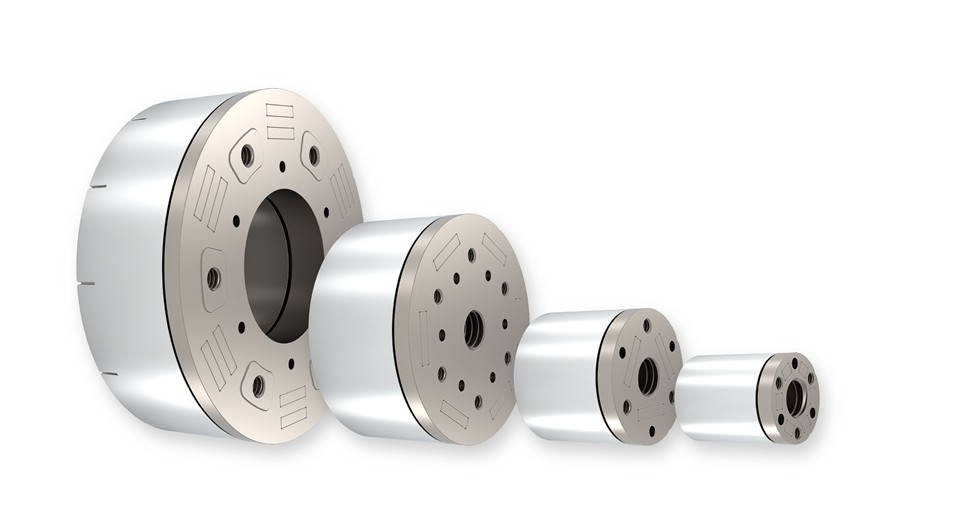
Resense develops highly miniaturized 6-axis F/T sensors that measure forces and torques in all spatial directions. These sensors are designed for seamless integration either directly at the surgical end-effector or in close proximity, such as at tool adapters. Their compact form factor, high sensitivity, and robust mechanical design make them ideal for integration into surgical robotic systems, where space constraints and precision are critical. Below, we highlight three exemplary use cases in surgical robotics that showcase the advantages of using Resense F/T sensors.
Three Application Examples
Adapter Integration in Dental Surgery
In dental surgical robotics, procedures are performed in extremely confined spaces inside the patient’s mouth. Here, precision and delicacy are paramount to prevent injury to soft tissues and to ensure successful outcomes. In this application, our larger sensor model HEX32, featuring a 14 mm hollow shaft, is integrated between the tool and the adapter of a hand-guided dental surgical robot.

Advantages:
- Enhanced Tool Control: The F/T sensor enables precise and intuitive hand-guiding of the robot arm and end-effector, allowing the surgeon to perform complex maneuvers with greater confidence and ease.
- Real-time Force Monitoring: Forces exerted on both the tool and the robotic structure are continuously monitored, allowing for immediate detection of abnormal contact or excessive force, thus increasing patient safety.
- Compact Integration: The hollow-shaft design facilitates integration of additional components such as suction or irrigation tubes without compromising sensor functionality or increasing system volume.
Tool Integration: An Example in Eye Surgery
Eye surgery demands the highest degree of precision due to the extreme sensitivity of ocular structures. Even the slightest error can lead to severe complications. In this context, force feedback is essential, especially during intraocular procedures.
The Resense HEX12 miniature F/T sensor, with its ultra-compact dimensions and integrated hollow shaft, is embedded directly within the surgical tool. The hollow shaft allows fluid delivery tubing to pass through, saving valuable space and maintaining the compactness of the robotic assembly.

Advantages:
- Ultra-High Sensitivity: The HEX12 can detect forces as low as 10 mN (equivalent to 1 gram), enabling highly delicate force interactions to be captured and interpreted by the control system.
- Tool-Tip Force Measurement: The sensor’s proximity to the tool tip ensures that forces are measured precisely at the point of contact, improving responsiveness and accuracy.
- System Miniaturization: Its small footprint supports the miniaturization of the entire robotic system, which is critical in ophthalmic applications.
Instrument Integration in Minimally Invasive Abdominal Surgery

Minimally invasive surgeries (MIS), particularly in abdominal procedures, are widely adopted in modern medicine, due to their reduced recovery times and minimized patient trauma. Robotic systems enhance these procedures by offering greater precision and dexterity. However, visual feedback alone is often insufficient, especially when interacting with soft tissue.
By integrating Resense F/T sensors directly into the surgical instruments used in MIS, such as laparoscopic tools, surgeons gain real-time haptic feedback during operation.
Advantages:
- Restoration of Tactile Feedback: The sensor data is used to recreate force sensations via haptic devices or control algorithms, providing the surgeon with a more intuitive understanding of tissue interaction.
- Improved Surgical Safety: Continuous force and torque measurement reduces the risk of unintentional tissue damage, especially in delicate structures.
- Multi-Axis Data Capture: Complex motions during MIS require full 6-axis force and torque monitoring to ensure safe and effective execution of tasks like suturing, cutting, or dissection.
For more information, visit resense.io or contact Sabrina Hock, Business Development: [email protected]