Magnetic Couplings in Surgical Robotics


Enhancing Reliability and Sterility
Magnetic couplings provide a contactless method for torque transmission, reducing contamination risks in medical environments. This article delves into how magnetic couplings improve reliability in surgical robotics, with a focus on engineering challenges and performance benefits.
What if a tiny, unseen force could revolutionize the precision and safety of every surgical procedure?
Imagine a world where medical devices operate flawlessly, free from the risks of contamination and mechanical wear, ensuring every incision is perfect and every recovery seamless. This isn’t science fiction; it’s the power of magnetic couplings, a groundbreaking technology set to redefine surgical robotics.
At Dexter Magnetic Technologies, we’re at the forefront of this revolution, delivering solutions that meet the exacting demands of medical device design engineers. Dive with us into the fascinating world of magnetic couplings and discover how they’re enhancing reliability and sterility in medical equipment, setting new standards for patient care.
Magnetic technology has revolutionized medical device applications, offering transformative solutions for diagnosis, treatment, and patient care. Magnetic couplings, in particular, provide an efficient and reliable way to transfer torque without direct mechanical contact between driving and driven components. This contactless power transmission is a performance cornerstone in various medical sectors due to its adaptability and precision.
The Role of Magnetic Couplings in Surgical Robotics
Surgical robotics demands unparalleled control and dexterity, enabling complex procedures with reduced risk of complications and improved patient outcomes. Magnetic couplings are key components in these systems, contributing to surgical gripping and holding, sensors, encoders, actuators, and motors.
There are several types of magnetic couplings, each offering distinct features and benefits tailored to specific medical requirements:
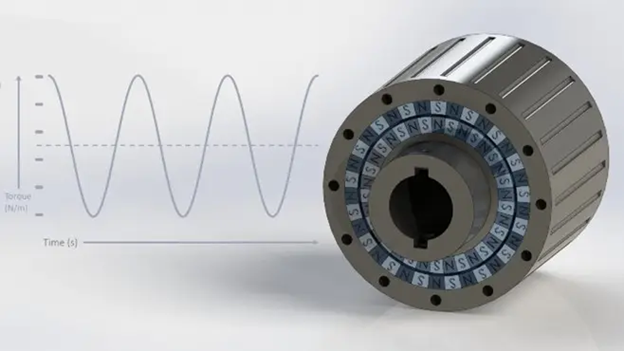
- Permanent Magnet Synchronous Couplings (PMSC): These couplings enable efficient torque or linear force transfer without physical contact, ensuring precise motion control. They excel at accommodating slight misalignments between input and output shafts, which is crucial in rotating applications like seal-less pumps. PMSCs also offer built-in overload and torque protection, safeguarding equipment and ensuring optimal performance under varying operating conditions. A significant advantage for medical applications is their ability to incorporate a non-magnetic containment barrier, eliminating mechanical seals and isolating the processing environment from external factors, thereby enhancing safety and preventing contamination.
- Eddy Current Couplings: Also known as eddy current drives or clutches, these devices transfer torque or induce linear motion without mechanical contact, relying on electromagnetic induction. They provide adjustable torque transmission and vibration damping capabilities, making them ideal for applications requiring smooth and controlled linear motion or precise tension control. Eddy current couplings can also be used for efficient and adjustable, contactless braking.
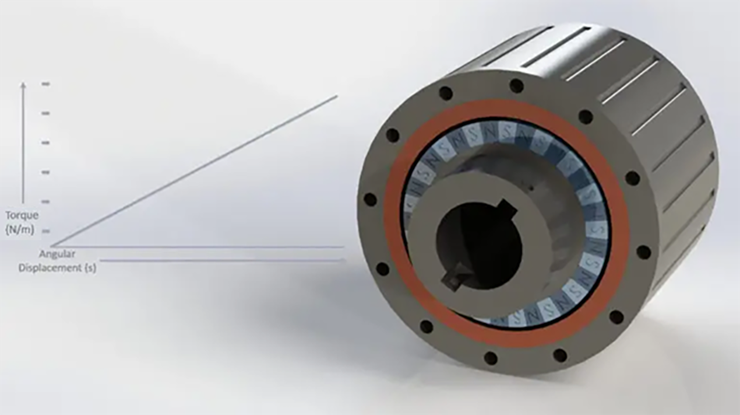
- Hysteresis Couplings: These innovative devices are used where precise torque transfer or smooth linear motion is essential, operating by inducing magnetic fields into a specialized magnetic hysteresis alloy, facilitating torque transmission or linear motion without direct mechanical contact between the driving and driven components. They ensure smooth and precise operation, ideal for scenarios requiring precise torque limiting and linear motion transmission. Hysteresis couplings are particularly useful in low-speed scenarios with frequent or permanent slipping, including filling and bottle capping plants, winding and unwinding equipment, as well as medical and materials handling technology.

Engineering Challenges and Performance Benefits
Integrating magnetic couplings into surgical robotics involves specific engineering challenges and yields significant performance benefits:
- Minimizing Contamination Risk: The contactless nature of magnetic couplings inherently reduces the risk of contamination because there is no physical wear or friction between components that could generate particulate matter. This is especially critical in sterile environments like operating rooms, where surgical robots are deployed.
- Accommodating Misalignments: Both synchronous and eddy current couplings can accommodate slight misalignments, reducing wear and tear on the system and enhancing longevity and reliability. This flexibility ensures smooth operation even in imperfect alignment scenarios, a key performance criteria that helps surgical robots compensate, making them more forgiving.
- Overload Protection: Synchronous couplings offer built-in overload and torque protection, preventing damage to sensitive components within surgical instruments and robotic systems.
- Thermal Management: Temperature fluctuations can affect the performance of magnets used in synchronous couplings and impact peak torque capabilities. Proper thermal management is essential to maintain optimal operating conditions and prolong the lifespan of the coupling system. In hysteresis couplings, higher frequencies can induce eddy current losses in conductive hysteresis alloys, leading to heating within the material, which requires detailed analysis by the designer.
- Managing Stray Magnetic Fields and EMI: The presence of stray magnetic fields and electromagnetic interference (EMI) poses challenges in medical device integration and operation. Collaborating with magnetic component partners like Dexter that specialize in EMI shielding and mitigation techniques enables medical device designers to effectively manage stray magnetic fields, ensuring compatibility with other medical devices and minimizing potential risks to patient safety and device functionality.
Autoclave-Compatible Sterilization Processes
For surgical components, autoclave-compatible sterilization processes are paramount. Magnetic couplings, by their very design, offer advantages here due to their sealed nature and lack of mechanical contact. This allows for easier integration into systems that must withstand high temperatures and pressures common in steam sterilization such as autoclaving.
The materials used in magnetic couplings and their containment barriers must be carefully selected to ensure they can withstand the rigorous conditions of autoclaving, including high heat and moisture, without degrading or compromising magnetic performance. Non-magnetic containment barrier materials are crucial for isolating the processing environment, and these materials must also be biocompatible and able to handle pressure and chemical exposure. Proper material selection, combined with robust design, ensures that magnetic couplings maintain their integrity and functionality even after repeated sterilization cycles, guaranteeing the long-term reliability and sterility of surgical equipment.
The strategic integration of magnetic couplings in medical device applications represents a paradigm shift in healthcare innovation. By partnering with the right magnetic component supplier, medical device developers can harness the full potential of magnetic technology to drive advancements in diagnosis, treatment, and patient care. Through a holistic approach to design, regulatory compliance (like ISO 10993 for Biocompatibility), and manufacturability, magnetic couplings empower developers to create safer, more efficient, and more reliable medical devices that improve clinical outcomes and enhance the quality of patient care. Unlocking new possibilities in mechanical power transmission and motion control in your medical settings starts with understanding the unique features and benefits of each coupling type.
Designing Magnetic Confidence Into Your Magnetic Couplings
Innovation in surgical robotics doesn’t just happen at the system level. It starts at the core, with magnetic couplings that are custom-designed, purpose-built, and compliant with your quality systems.
With Dexter, you get more than a magnetic coupling. You get an expert magnetic couplings strategic partner in surgical robotics innovation.
Ready to Prototype Your Next-Gen Surgical Robotics Magnetic Coupling?
Let’s co-engineer a custom magnetic coupling solution that meets your specs and exceeds your performance goals.
Speak with our medical device magnet design team
Additional Resources
Unlocking the Potential of Magnetic Couplings in Medical Device Applications: https://www.dextermag.com/unlocking-the-potential-of-magnetic-couplings-in-medical-device-applications/
High-Performance Magnetics for Medical Applications: https://www.dextermag.com/high-performance-magnetics-for-medical-applications/
