Analytical Components International Launches New Luer Fittings, Adapters, and Quick Connect Fittings Line

Analytical Components International has announced the launch of its new line of Luer fittings, adapters, and Quick Connect & Disconnect fittings.

Luer connectors are a common choice for limited use or disposable applications, providing a standardized and micro-permeation-free connection method. These Luer adapters are standardized micro-permeation-free adapters typically connected using male and female Luer parts, simplifying the management of liquid or gaseous medical fluids and allowing multiple compatible fluids to be managed using the same tube.

The Luer fittings and adapters are engineered to connect flexible tubing with inner diameters from 1/16″ to 1/4″ and are manufactured from medical-grade polypropylene (PP). This material is non-toxic, odorless, heat resistant, and resistant to chemical corrosion and various organic substances, making it suitable for non-corrosive fluids and environments. All components are produced using high quality molding and machining and are machined with tight dimensional tolerance to ensure the best gas tightness and high reliability.

The product line includes:

  • Luer-to-Luer connectors, featuring male or female Luer slips or Luer locks for standardized medical and laboratory connections.
  • Luer-to-barb fittings, designed with one side with a Luer end and another side with a tapered barb for connecting flexible tubing. These connectors are mostly used in peristaltic pumps in a fluidic system, where tightness of connection is the most important factor.

In addition to Luer products, ACI is expanding its fluidic connection portfolio with Quick Connect & Disconnect fittings and couplings, including the following series:

  • SMC Series: The smallest connector product in the fast plug connector category, offering a rotary type product that is a reliable alternative to Luer connections. The ability to rotate freely during pipeline connection helps prevent pipeline twisting and accidental disconnects.
  • PMC Series: Designed for a wide range of general purposes, featuring single-handed connection/disconnection and an integral end, making it a preferred product for easy use and production.
  • PLC Series: Manufactured using polyoxymethylene thermoplastic injection molding, capable of withstanding the mildest chemical solution while maintaining single-handed connection/disconnection and an integral end for ease of use and production.
  • APC Series: Characterized by a plastic finger lock, fewer moving parts, smooth appearance, easy design for use, exquisite appearance, and high flow rate. Select models are designed to be more sturdy and durable, expanding the application range of the APC series.

“These new Luer fittings, adapters, and Quick Connect fittings are designed with reliability and ease of use at their core,” said Michael Mainvielle, President and General Manager at ACI. “Across medical, laboratory, and industrial environments, tightness of connection, tool free operation, and single handed usability are critical, and these products were engineered to meet those demands.”

The new product line is widely used in environmental analyzers, laboratory instruments, medical equipment, petrochemical systems, food and beverage vending machines, bio-pharmaceutical analysis, and metering applications.

Visit us at Booth #2501 at MD&M West 2026, taking place 3–5 February at the Anaheim Convention Center, or get in touch to learn more: https://analyticalcomp.com/contact-us/

Source: Analytical Components International

TRITEC® Electronic GmbH Announces Strategic Collaboration with VuWall and G&D

TRITEC® Electronic GmbH announces the inclusion of VuWall in Naxicap’s portfolio of technology companies. Naxicap, a renowned private equity firm, previously acquired Guntermann & Drunck GmbH (G&D) in 2020 and TRITEC® Electronic GmbH in 2022. With VuWall joining the group, the portfolio is poised to redefine the control room industry with comprehensive end-to-end solutions for customers worldwide.

This strategic partnership brings together the strengths of TRITEC, VuWall, and
G&D. VuWall’s expertise in innovative software development complements G&D’s
renowned high-performance KVM solutions and TRITEC’s specialization in
embedded video management systems. The collaboration creates an unparalleled
synergy, offering fully integrated solutions that streamline operations, enhance
real-time decision-making, and redefine efficiency and user experience in mission critical environments.

“The addition of VuWall to Naxicap’s portfolio is a major milestone for the group,
enabling us to combine our hardware expertise with VuWall’s innovative IP-based
video wall solutions,” said Markus Müller-Heidelberg, TRITEC’s Managing Director.
“This partnership empowers us to deliver seamless and efficient solutions to
customers in both industrial and medical applications, driving innovation across
sectors.”

Source: TRITEC® Electronic GmbH

Sony Launches LMD-32M1MD 4K Mini-LED Medical Monitor

Sony has announced its latest 4K Mini-LED monitor, the LMD-32M1MD, designed to deliver an unparalleled viewing experience in medical environments. With its advanced features and superior picture quality, the LMD-32M1MD sets a new standard for clarity and precision.

High Picture Quality with Advanced Local Dimming Technology

The LMD-32M1MD features Sony’s advanced Local Dimming Technology (Backlight Master Drive) for unrivalled precision. This technology precisely controls the panel backlight’s dense array of mini-LEDs, ensuring stunning brightness and high contrast. By independently controlling the LED backlighting sources in light and dark zones of the image, the LMD-32M1MD achieves significantly improved black reproduction and a contrast ratio of 1,000,000:1. With a peak brightness exceeding 1,850 cd/m², the monitor delivers exceptional visual detail and clarity.

The LMD-32M1MD is the first surgical monitor worldwide to achieve VESA DisplayHDR1000 certification (as of January 2025).

Minimised Screen Reflection for Optimal Viewing

In brightly lit operating rooms, the LMD-32M1MD minimises screen reflection to provide surgeons with a clearer view. Sony’s unique Anti-Reflection Technology combines two reflection suppression technologies: Low Reflection and Anti-Glare surface treatment. This combination reduces the amount of reflected light and diffuses incoming light, resulting in extremely high contrast images with lifelike color reproduction.

Wide Color Gamut for Realistic Visualisation

Equipped with LCD and signal processing technology conforming to ITU-R recommendation BT.2020, the LMD-32M1MD achieves a wide color gamut. This enables superior color reproduction, resulting in more realistic visualisation of surgical images. This emphasis on visual quality makes the LMD-32M1MD the ideal candidate for all medical interventions, from complex invasive procedures to more routine checkups.

Minimises Airflow Disruption by Fan-less Design

The LMD-32M1MD is designed with user-friendliness and healthcare applications in mind. Its impressive fan-less design reduces unwanted interference with ventilation airflow around the monitor.

Versatile Connectivity for Diverse Modalities and Equipment

The LMD-32M1MD offers a comprehensive array of input/output connectors, including 12G-SDI, HDMI, and Display Port, ensuring versatile connectivity for diverse modalities and equipment.

Auto Panel Brightness Adjustment

The integrated light sensor automatically adjusts brightness to match the ambient lighting conditions, making the LMD-32M1MD particularly well suited for procedures performed in low-light environments, such as ICG navigation surgery.

Suitable Design for Medical Facilities

The monitor’s slim bezel and rounded corners simplify integration in the operating room, while the smooth surface and streamlined back shape make it easy to wipe down for cleanliness. The monitor’s resistance to liquid ingress and solid particles, with IP45 (front) and IP32 (rear) dustproof and splashproof ratings further enhance its suitability for medical facilities.

Intuitive Navigation and Custom Buttons

The monitor’s LED backlighting selectively illuminates active control buttons on the front panel, offering clear guidance to clinical staff even in dark environments. Additionally, frequently used functions can be assigned to three custom buttons on the front panel, allowing for quick access and enhanced workflow efficiency.

Environmentally Conscious Efforts

The packaging for the LMD-32M1MD uses molded pulp packaging materials, eliminating the use of expanded polystyrene foam. The monitor is also supplied in a covered non-woven bag made mainly from plant cellulose, reducing the amount of virgin plastic used for packaging by approximately 86% when compared to the previous packaging* that would have been used. The LMD-32M1MD is covered by Sony’s PrimeSupport, making it a reliable and sustainable investment. It includes up to 5 years of support and fast-track repairs. With PrimeSupport, the LMD-32M1MD is ready to meet future challenges

“At Sony, we are proud to announce the LMD-32M1MD, a monitor that leverages decades of expertise in developing high-performance consumer televisions and market-leading professional monitors. Combining advanced technology with features specifically tailored to the unique demands of the healthcare environment, this new solution delivers reliability, precision, and versatility to master any task in the operating room” said Ludger Philippsen, Head of Healthcare Solutions at Sony Europe. “Our new monitor not only meets the high-performance needs of the healthcare industry but also reflects our commitment to reducing environmental impact and contributing to a more sustainable world”.

The LMD-32M1MD is now available for purchase. For more information on Sony’s professional display technologies and to inquire about the LMD-32M1MD, please visit https://pro.sony/en_GB/products/surgical-monitors/lmd-32m1md

This product complies with the quality management system for medical devices; however, it may be classified as a non-medical device in certain regions. The timing for obtaining medical device approvals varies by region.

*Compared with the LMD-X3200MD, introduced in 2020

*800.00mm viewable area, measured diagonally

Source: Sony

Brain Navi Pioneers Robotic Neurosurgery in Bolivia with its NaoTrac Robot

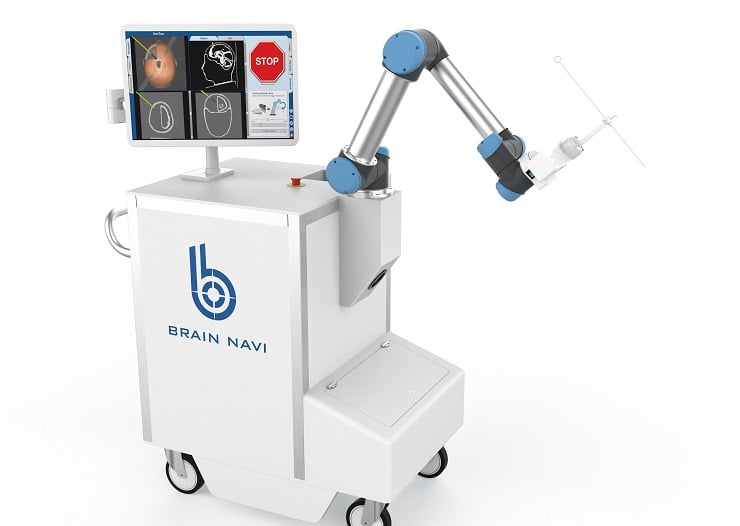
Bolivia marked a historic moment in neurosurgery at Hospital Arcoiris, where two successful brain tumor biopsy surgeries were conducted using NaoTrac, the world’s first autonomous surgical navigation robot. These groundbreaking surgeries, led by experienced neurosurgeon Dr.Mirko Mantilla, achieved precise and safe extraction of biopsy tissue, offering new hope for faster recovery and improved patient outcomes across Bolivia. Dr. Mantilla expressed optimism about the impact of NaoTrac in the region: “Having NaoTrac here is a game-changer. It will greatly enhance recovery and help countless patients in need.”

Hospital Arcoiris is leading the way in making world-class medical care accessible to all Bolivians. Through the pioneering social surgery program, the hospital is proud to offer cutting-edge neurosurgical procedures using the NaoTrac robotic system at minimal or no cost, especially for underserved communities. This initiative reflects the unwavering dedication to improving the lives of those in need, ensuring that advanced healthcare technology is within reach for everyone. The surgeries are part of a broader collaboration between Brain Navi and Hospital Arcoiris to bring advanced neurosurgical procedures—including stroke treatment, neuroendoscopy, deep brain stimulation, and stereotactic EEG—to Bolivia.

Nelson Farfan Espada, Brain Navi’s Managing Director for Latin America collaborated closely with the distributor ICERLAB S.R.L. and Hospital Arcoiris to make this groundbreaking initiative a reality. Reflecting on the journey, he shared, “After a challenging yet deeply rewarding process, I believe this program will truly benefit the people of Bolivia. By embracing the latest advancements in precision medicine, we are giving Bolivians access to world-class medical care and the opportunity for healthier, brighter futures.

Source: Brain Navi

Brain Navi to Participate in MEDICA 2024

NaoTrac, Brain Navi Biotechnology’s flagship autonomous surgical navigation robot, is set to take center stage at MEDICA 2024, the world’s largest medical trade fair, held in Düsseldorf, Germany, from November 11-14. NaoTrac is designed to revolutionize neurosurgery with its advanced machine vision technology, which enhances navigation precision and assists neurosurgeons during complex procedures. Attendees can experience this transformative technology firsthand by visiting Brain Navi at Hall 16, Booth D12.

Developed for precision and efficiency, NaoTrac streamlines surgeries, reduces risks, and improves patient outcomes, reshaping the future of neurosurgery. Visitors to the booth will have the opportunity to witness live demonstrations and meet with Brain Navi’s team to explore how NaoTrac is redefining patient care on a global scale.

With hundreds of successful cases, NaoTrac has already been instrumental in helping surgeons save lives and enhance surgical outcomes, exemplifying Brain Navi’s commitment to delivering cutting-edge medical technology solutions.

In addition to NaoTrac, Brain Navi will highlight its latest innovations in robotic-assisted surgery, all designed with a focus on precision and patient safety. These innovations reflect the company’s dedication to advancing healthcare through groundbreaking technological developments.

As the global healthcare sector continues to embrace technology-driven solutions, Brain Navi invites industry leaders, distributors, and healthcare professionals to explore how NaoTrac is advancing surgical precision and transforming patient care. Brain Navi is also keen to connect with distributors experienced in medical technology, particularly as it seeks to expand its partnerships in Europe.

Source: Brain Navi

Brain Navi Completes First Procedure in Netherlands Using its NaoTrac Surgical Navigation Robot

Brain Navi announces the completion of its first case in Netherlands, which was successfully and safely performed at Erasmus MC in Rotterdam, Netherlands.

Brain biopsy helps doctors decide the best treatment for the patient after taking a tissue sample from the brain, usually under general anesthetic. 

To avoid long and frustrating registration process, NaoTrac incorporates machine vision technology, and finishes the patient and instrument registrations within 30 seconds to 3 minutes. It is an open platform, and the instrument registration is performed by the robotic arm automatically, much safer and faster. 

This milestone of Brain Navi from Netherlands comes only a few months after the company announced its completion of 100 clinical case using NaoTrac.  

“We are thrilled to be working with The Neurosurgery Department of Erasmus MC to demonstrate the value that NaoTrac could bring to Dutch market. Moving forward, we aim to expand our presence in other parts of Europe, introduce this novel technology to help more surgeons and patients.” said Dr. Jerry Chen, the CEO of Brain Navi. 

Dr. Arnaud Vincent, the neurosurgeon from Erasmus MC also gave his feedback after the first surgery performed in the center. “The first surgery went very well, very easy, very quick, the procedure was less than an hour. The patient recovered very well and we have very precise biopsy of the tumor.”

About Erasmus MC:

Erasmus Medical Center is the largest and one of the most trusted scientific medical centers in Europe. Both in terms of turnover and number of beds, the hospital is the largest of the eight university medical centers in the Netherlands.  

About Brain Navi:

Brain Navi Biotechnology, a leading Taiwanese surgical robotic company, specializes in designing and developing innovative navigation and robotic surgery technologies. Their proprietary Surface Mapping Auto-Registration Technology (SMART) represents a significant surgical breakthrough, integrating machine vision, robotics, and AI for streamlined surgical procedures and real-time imaging, ensuring minimal invasive outcomes. NaoTrac’s swift patient registration, and automatic surgical instrument registration enable surgeons to plan trajectories effortlessly, and the robot ensures precise autonomous navigation towards the desired target. 

Source: Brain Navi

Sony Develops Proprietary Microsurgery Assistance Robot

Sony Group Corporation has announced the development of a microsurgery assistance robot capable of automatic surgical instrument exchange and precision control. The prototype will be unveiled at the Sony booth during the 2024 Institute of Electrical and Electronics Engineers (IEEE) International Conference on Robotics and Automation (ICRA2024), which opens in Yokohama on May 13.

Factors such as a shrinking workforce caused by an aging society have resulted in a serious shortage of medical practitioners, who face an increased workload in the medical field. Against this backdrop, in the field of surgery where high skill levels are required, the use of surgical robots that assist with precision operations is expected to reduce surgeon workloads and help promote the spread of advanced medical services.

The prototype was developed by Sony’s R&D team for technology development to assist in microsurgical procedures for use in conjunction with a microscope, etc., to work on extremely small tissues, such as veins and nerves. The movements of the surgeons’ hands and fingers captured with a highly sensitive control device are replicated on a small surgical instrument that operates smoothly, akin to the movement of the human wrist. Practical challenges with conventional surgical assistant robots include interruptions and delays in surgery due to manually exchanging surgical instruments, but the R&D team has developed a system that allows for the automatic exchange of these parts through miniaturizing them. In so doing, the R&D team has been seeking the possibility to allow the robot to assist in a wide variety of surgical procedures, enabling more medical practitioners to perform microsurgeries that require extremely delicate operations in the future.

In February 2024, an experiment was conducted by Aichi Medical University, where surgeons and other medical practitioners that do not specialize in microsurgical procedures used the prototype and successfully created an anastomosis in animal blood vessels (diameter of approximately 0.6 mm). This is the world’s first case of microvascular anastomosis achieved using a surgical assistance robot with an automatic instrument exchange function*.

  • *According to Sony research, as of May 9, 2024.

Going forward, Sony plans to work with university medical departments and medical institutions to further develop and verify the effectiveness of robotic surgical assistance technology. Continuing to move forward with R&D, the company aims to help resolve issues in the medical domain and contribute to the advancement of medicine by providing robotic technologies.

Source: Sony

Mayo Clinic and ASU MedTech Accelerator Selects Brain Navi

Mayo Clinic in Arizona and Arizona State University (ASU) are kicking off the fifth cohort of the MedTech Accelerator on March 17, 2024. The Accelerator brings together leaders in innovation from across the globe and healthcare industry to advance their products, knowledge and value propositions in one of the nation’s fastest-growing biomedical hubs — Arizona.

The Accelerator provides emerging companies with a multi-day immersive curriculum in health care entrepreneurship including: lectures and workshops with world-class scientific and engineering experts; resources to navigate regulatory pathways; and tools for product commercialization and customer acquisition. Additionally, participants attend mentoring, business development, and networking events.

“One of the most rewarding aspects of our Accelerator program is the hands-on experience our students receive,” said Dr. Rick Hall, co-managing partner of the MedTech Accelerator and ASU emeritus professor.  “This year we will have representation from our National Science Foundation Research Traineeship interning with the program. These students, whose graduate work is focused on the design and manufacturing of medical devices, will obtain a level of hands-on experience rarely offered at this level of study.”

After the two-week curriculum portion of the program, the cohort will remain a part of the MedTech Accelerator support network allowing continued collaboration and guidance.

“Now that we are in our fifth cohort of the Accelerator we have a bit of history to look back on and can see how the Accelerator acts as an indicator of sea-change in the MedTech industry,” said Steven Lester, M.D., medical director for Mayo Clinic’s Discovery Oasis and co-founder and chief medical officer of the MedTech Accelerator. “Just last year we identified that AI was about to become a key focus in the medical innovation space and this year nearly a third of our cohort companies have AI at the center of their product design.”

Arizona’s reputation as a medical destination and biotech ecosystem continues to rise. Most recently, ASU and Mayo Clinic received grant monies from the Flinn Foundation to fund a new inter-institutional Division of Medical Engineering to develop a best-in-class learning and innovation ecosystem where faculty, clinical staff, and students collaborate to solve real-world clinical problems.

“The diversity of this cohort is representative of the deep collection of medtech capabilities being developed around Greater Phoenix,” said Greater Phoenix Economic Council President & CEO Chris Camacho. “It’s invigorating to see how this accelerator is changing the market and providing these companies opportunities to develop their products and truly make a difference in the sphere. We’re seeing the future of medical care develop before our eyes.”

This year’s participating companies span a wide range of solutions across wellness, health care and medicine:

Aavia, New York

Aavia is an app that empowers patients to track 30+ physical, mental, and emotional hormone health indicators for detailed monitoring and heightened self-awareness. This enables precise daily symptom prediction for a personalized, scientifically informed experience. The use of Aavia by patients gives healthcare providers comprehensive and real-time data about their patients’ hormone health, enabling prompt and informed care responses.

Brain Navi, Taiwan

Brain Navi is an innovative medical device company with a particular focus on surgical robotic systems. Besides the flagship neurosurgical navigation robot NaoTrac, the company’s product pipeline includes KrystoLens (a single-use neuro-endoscope) and another surgical robot in the R&D stage which is yet to be announced.

Galileo Group, Florida

Galileo has performed approved pre-clinical research and collected hundreds of live patient on-site scans to develop a science-grade database, detection algorithms and skin response models. Specialized capabilities and resources are in continued development and include: human tissue spectral signatures with reference pathology, skin surface imaging for lesion detection, skin cancer mapping and skin radiation effects measurement, sub-surface vascular imaging, and multi-sensor measurement and data fusion for 3D body mapping.

JelloX, Taiwan

JelloX, is at the forefront of innovation in the pathology space. Its patented 3D digital pathology tissue imaging with AI-empowered analysis translates into a precision diagnosis solution. The aim is to create the world’s first 3D digital pathology solution in support of precision cancer diagnosis, optimize patient treatment outcome, and match the right patients with the right drugs at the right time.

MiiCare, United Kingdom

The MiiCare team believes everyone should be able to live the life they choose from the comfort of home and not have to worry about their health as they age. To power this independent lifestyle, a preventative care platform collects and converts comprehensive sensor data into actionable wisdom for providers to personalize effective care plans at scale. Monica, a conversational AI health coach, then supports older adults to self-care at home in an empowering aging experience that extends life span.

Mindsigns Health, Singapore

Mindsigns Health™ is a global provider of an AI powered platform to monitor brain disorders and mental illnesses. Mindsigns Health™ develops secure healthcare products that meet the needs of both clinicians and patients to improve the patient journey and empower the doctor-patient relationship.

NeuroBrowser™ is an automated EEG analysis software to interpret and analyze electrical abnormalities in neurological disorders such as epilepsy and the monitoring of patients in clinical and ambulatory environments.

GenMind™ captures audio and other digital signals outside clinical and office settings to enable the remote monitoring of negative symptoms and cognitive impairment, which are biomarkers associated with a number of serious mental illnesses, in order to deliver a continuum of care, improve access and help increase compliance.

NurseIO, Arizona

NurseIO is an app-based technology platform that connects health care professionals looking for flexible work to open per diem shifts within their local vicinity. NurseIO provides clinicians a path to follow their passion of taking care of patients on their own terms and in turn, we provide healthcare facilities vetted, qualified and experienced clinicians to fill gaps when needed.

Paldara Pharmaceuticals, Oklahoma

Paldara is developing the next generation of antimicrobial medical device coatings. A primary indication is as a hydrogel coating for urinary catheters in order to prevent up to 99% of catheter-associated urinary tract infections (CAUTIs), the most common hospital acquired infection.

Roddy Medical, Wisconsin

Roddy Medical’s SecureMove-TLC® is a single-patient use medical device designed to secure and manage different types of medical tubes, lines and cords to support patient therapy efficiency and improve medical line management and safety. The tension mitigation device is designed to eliminate hazardous pulling and line/cord dislodgement during therapy, transport, and patient movement, unlike any existing products, providing hospital cost savings.

Scaled Insights, Ontario, Canada

Scaled Insights is a developer of behavioral artificial Intelligence software designed to understand human behavior and help doctors to nudge their patients toward healthier pathways. The company’s software reduces a small sample of the human language down to personality profiles that include multiple variables (based on the big five personality attributes), and then used to cluster people into Personas groups, enabling us to build models to determine how to nudge people in each unique personality group in order to influence healthy behavior choices.

Source: Brain Navi

Brain Navi Announces 100 Procedure Milestone

Brain Navi has announced the completion of the 100th case utilizing its neurosurgical navigation robot NaoTrac. The 100th case has been performed by Neurosurgery Department Director Dr. Hao-Yu Chuang at Annan Hospital in Tainan, Taiwan.

“It is my pleasure to be witnessing this major milestone which shows the continued clinical adoption of NaoTrac surgical navigation robot. I am happy and continue to provide this state-of-the-art surgical technology to my patients,” said Dr. Hao-Yu Chuang. “One of the main benefits compared to other systems is that we can accurately register cranial anatomy in any patient position, including lateral and prone positions.”

Across Taiwan, there have been already several hospitals installed the system. China Medical University Hospital Neurosurgery Department Director Chun-Chung Chen said, “In the past time, we can only treat the ICH blood clot blindly, now we can plan the pathway, check in real time and complete the procedure perfectly.” Another Director Dr. Jeng-Hung Guo said “NaoTrac’s fast registration leads to reduce surgical procedure time and faster patient recoveries. The NaoTrac robot worked very well for intracerebral hemorrhages cases, especially with hematoma volumes less than 30ml but with severe symptoms and providing an alternative solution to those patients rather than waiting for self-absorption.”

The very first adopter of NaoTrac surgical robot is Hualien Tzu Chi Medical Center that has been using the system for brain surgeries from the very first clinical case on 7th Nov. 2018. Superintendent Dr. Shinn-Zong Lin said “NaoTrac is just what all neurosurgeons want. It can make the doctor’s dream come true and let patients with disability return to life.” Professor Tsung-Lang Chiu published the first medical journal article of NaoTrac and showed the efficacy and economic benefits, he said, “NaoTrac robotic system is very easy to incorporate into our practice and workflow and bring efficiencies to our neurosurgeons and hospitals”.

brain-navi-nao-trac

To avoid long and frustrating registration process, NaoTrac incorporates machine vision technology, and finishes the patient and instrument registrations within 30 seconds to 3 minutes. NaoTrac system has received CE-mark in April 2021 and Taiwan FDA approval in July 2022 and during the initial market release, along with international congresses, Brain Navi has been able to collect valuable feedback from a large number of neurosurgeons, and continue to integrate those ideas into the NaoTrac platform to meet the market needs.

NaoTrac 100 Surgical Procedure

Dr. Jerry Chen, the CEO of Brain Navi stated “We are very pleased by the fact that all these 100 procedures were completed without any complication. 2024 will be the year that marks the beginning of our international expansion as we started collaborating with partners in USA, Europe, Japan, Middle East, Latin America and Malaysia besides Taiwan. And by doing so, we would be able to bring this technology to more hospitals to streamline their OR workflows, and ultimately benefiting more patients.”  

Source: Brain Navi