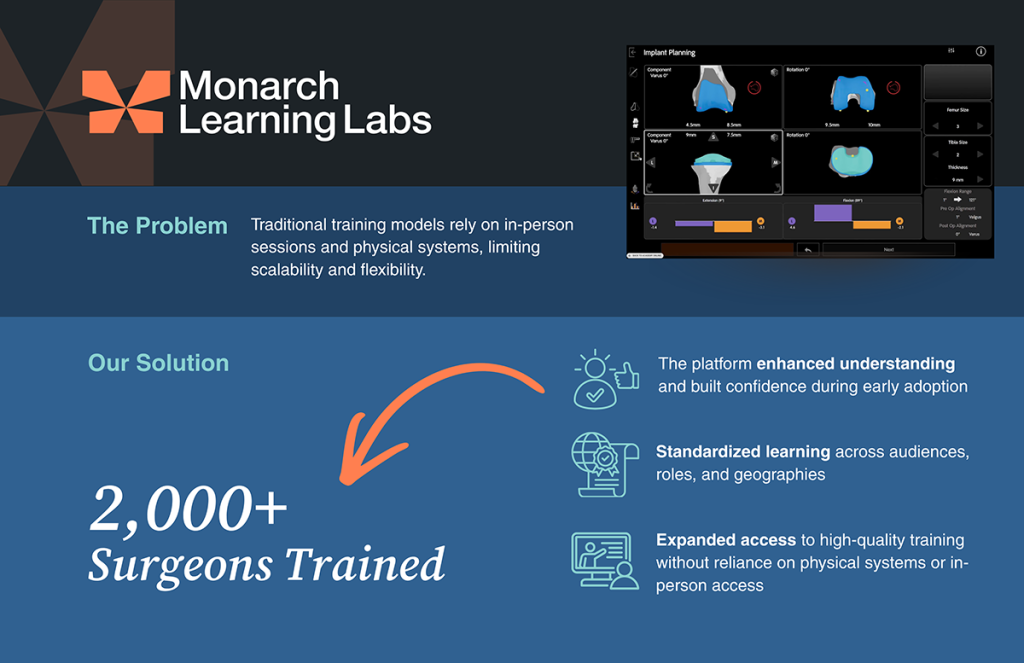
This whitepaper explores how digital twin technology can transform medical device education by expanding access to training and enabling more consistent learning experiences across the surgical education continuum. It examines how traditional training models, which depend heavily on physical systems and in-person instruction, can create barriers to scalability, flexibility, and learner confidence.
The paper highlights how a browser-based digital twin of an intraoperative planning tool was used to provide surgeons and clinical teams with access to realistic workflows outside of the operating room. By enabling repeatable interaction with the system, the approach helped users build familiarity, strengthen their understanding of planning decisions, and gain confidence before clinical use.
A key focus of the whitepaper is the role of digital product twins in supporting education at every stage of learning. The paper demonstrates how virtual training environments can improve accessibility, standardise educational experiences, enable reusable training content, and provide a scalable foundation for future skills development and assessment.
Key Topics Covered
- Using digital twin technology to support surgical education and device training
- Expanding access to training beyond physical systems and in-person learning
- Building confidence through repeatable interaction with clinical workflows
- Visualising planning decisions and their intraoperative impact
- Standardising education across teams, roles, and geographies
- Creating reusable, high-value educational content
- Supporting learners from early exposure through advanced proficiency
- Future opportunities for structured assessment and skills development
Download Monarch Learning Labs’ whitepaper to learn how digital twin technology can help make surgical education more accessible, scalable, and effective.