FISBA

Founded in 1957, FISBA is a global leader in the design and manufacture of high precision micro-optics and opto-mechanical systems for medical endoscopy and robotic surgery. 

Our expertise and capabilities support your product development path from R&D and prototype, to our DFM (Design for manufacturing) philosophy, engineering, supply chain optimization, metrology, leading to volume production.  Our engineers have a profound understanding of the underlying optical technologies and manufacturing processes enabling the world’s leading brands to fulfill their market potential.   

Our Solutions:

Imaging Optics and Coatings adapted for Endoscopy and Surgical devices

The endoscopy and robotic surgical markets rely on high precision optical components and complex opto-mechanical.  We are experts in the design and manufacture of custom high precision micro optics both spherical and aspherical, plano and molded lenses down to 0.3 mm including complex flat optics, precision optical assemblies, prisms, polygons, windows, mirrors and wedges.  

Our in-house coating expertise includes sophisticated AR coatings, metallic rear-surface mirrors and masked black chrome coatings to reduce light scatter.

Design and production of miniaturized glass aspheres for distortion control

Imaging with 4K resolution has become the standard in high end endoscopy.  To take full advantage of 4K resolution means reducing distortion for the benefit of equidistant resolution and location identification.  Precision molded glass aspheres provide a scalable solution for optimizing the optical design and minimizing distortion. FISBA designs and produces high-end precision molded aspheres offering repeatable and consistent performance with industrial scalability. A driver for the scalability and precision in glass molding is our in-house knowledge, capacity and expertise in manufacturing the precision tools for molding.

Miniaturization driving chip on tip architectures

The increase in minimally invasive clinical procedures and desire to improve patient outcomes drives the need for smaller endoscopic devices. Reducing the surgical access diameter for minimally invasive clinical applications creates challenges.  Imaging technologies respond by developing miniaturized CMOS sensors that require higher precision optical assemblies integrated with chip on tip architectures.  These complex designs may need to integrate multiple functions – illumination, imaging and working channel in parallel.

Compact stereo-vision optics and designs tested to MTF performance

High quality stereo vision integrated in endoscopic system with double chip on tip CMOS sensors in robotic surgery is becoming a widely adopted imaging modality. Compact high-quality micro-optics on dual sensor integrations enable the surgeon to experience distance, depth and geometry in the target application, often a key factor for fast orientation in complex organ environments. For best experience and use without eye-fatigue, it is a precondition to qualify the micro-optic systems for the two “eyes” to highest quality standards, performed with modulation transfer function (MTF) imaging targets. Optimized endoscopic stereo-vision systems designed to be scalable, reliable, and meeting the demanding requirements for robotic surgery applications are key to this growth market.

Compact angled viewing with micro-prisms

Angled viewing is a long-standing function for optimized endoscopic imaging, especially when coupled with rigid endoscopes allowing the surgeon to capture more visual information on the clinical application. FISBA provides key enabling imaging technology – coated micro-prism systems in combination with additional imaging optics and optimized mirror coatings – to achieve angled endoscopic viewing system designs.  A main driver for efficiency is the miniaturized size of the micro-prism systems not exceeding the overall diameter of the imaging optics.

Design and coatings optimized for NIR fluorescence imaging

Clinical endoscopy is being enhanced by fluorescence imaging, for the specific benefit of perfusion imaging and multifocal tumor identification. The design and realization for these dichroic functions has expanded into the near-infrared spectral domain (NIR). FISBA designs and implements micro-optic coatings that enhance the imaging capabilities and allow for greater image contrast.  A driver for the effectiveness in fluorescence imaging is the knowledge and expertise on how to spectrally separate the signal amplitudes between visual and fluorescence channel. Our expertise includes sophisticated AR coatings, metallic rear-surface mirrors and masked black chrome coatings to reduce light scatter.

Illumination LED solutions over fiber-bundles integrated to the tip

Multispectral endoscopic imaging coupled with software and artificial intelligence modalities give the surgeon a valuable tool in the detection and identification of smaller early stage lesions. Structured illumination provides another layer to advanced endoscopic imaging systems. FISBA has expertise in the design and integration of fiber-optic flexible light bundles, optimized miniature LED illumination systems, and know how to efficiently couple sources to fiber to maximize brightness.  Further requirements such as control of tightness and illumination fiber integrity over prolonged use-cycles are drivers for the system.
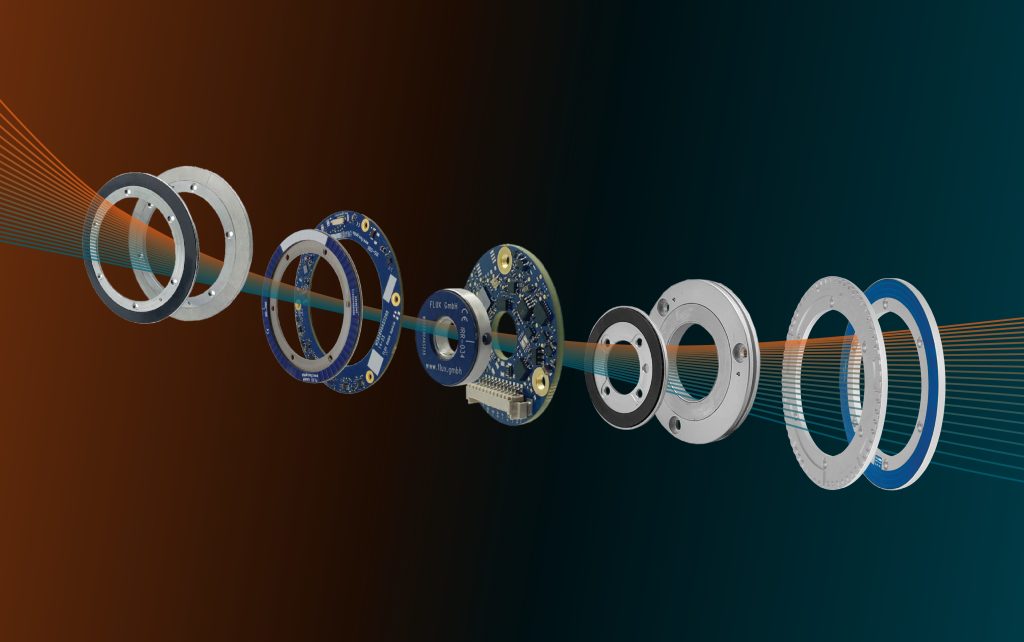
FLUX GmbH

Patented GMI technology developed by FLUX sets new standards in position measurement, meeting future industry requirements.

Founded in 2017 and headquartered in Braunau am Inn, Austria, FLUX GmbH is backed-up by more than 40 years of experience in the field of Position Feedback Encoder Systems.

FLUX is supported by engineers with extensive interdisciplinary experiences including expertise in technology research, analog-digital hardware, firmware, and mechanical designs.

The FLUX team’s extensive know-how and innovative spirit led to the development of the patented GMI® technology. The extended performance and unique characteristics of FLUX GMI® encoders contribute to their flexibility, ease of integration, and added value in the field of close-loop motion systems in a wide range of high-performance applications, including surgical robots.

Medical applications require special solutions – and it is precisely for these cases FLUX GmbH offers unique rotary and linear measuring systems with patented GMI technology to improve performance and usability of currently available market solutions.

Additionally to the GMI® technology, FLUX has developed a patent pending Inductive technology which allows for compactness without sacrificing performance.

FLUX encoders impress with highest performance and precision. Lightweight and compact, they can be used wherever conventional encoders are not feasible.

Medicaroid

Medicaroid Corporation was established in Kobe city, Hyogo prefecture in 2013 as a joint investment between Kawasaki Heavy Industries, Ltd., and Sysmex Corporation, with one mission, to support a society where everyone including patients, their families, and medical professionals can live peacefully through our medical robots.

Our name Medicaroid is a fusion of the words “medical” and “android” and represents our medical robots. We want to shape the future by combining our understanding of robotics with human-design, client ideas and cutting-edge technological standards where the patient continues to stand in the center of all we do.

Medicaroid is born out of a strong robotics heritage through Kawasaki Heavy Industries and the medical diagnostic expertise of Sysmex Corporation. This joint venture allows us to continue a pioneering path to develop robots which assist humans in the healthcare landscape.

Medicaroid’s goal is to provide a wide range of robotics not only in the surgical field but for a wide range of healthcare functions, developing innovations that will change people’s lives.

Moon Surgical

Moon Surgical is transforming the operating room with Physical AI, seamlessly integrating intelligence and robotics to elevate the capabilities of surgical teams.

The Maestro System represents a new category of minimally invasive surgery—expanding the scale at which robotics are delivered into the operating rooms. Instinctive, collaborative, and cost-effective, Maestro empowers teams to deliver exceptional care with greater adaptability and control.

Maestro Insights by Moon Surgical is a digital platform focused on improving visibility and efficiency within the operating room. The system captures and organises procedural and operational data to provide insights into surgical workflow, coordination, and resource utilisation. By helping healthcare teams better understand operating room activity and performance, Maestro Insights supports more connected, data-driven surgical environments.

TRITEC Electronic GmbH

TRITEC Electronic GmbH is the developer and manufacturer of the Multi Display Manager (MDM). A powerful solution for multi-modality Large Display Solutions and distributed video management arrangements. With more than 15,000 devices sold worldwide since 2008, we support our OEM partners in optimizing the imaging workflow of their medical solutions in operating theatres. With the integration of up to 45 image and video sources, KVM support to control connected sources and a flexible multi-modality display layout we find the best concept to support all requirements of a state-of-the-art healthcare scenario.

Key functions are:

  • Pixel perfect with near zero latency, no effects on hand-eye coordination
  • Hybrid technology with 10G fiber optic Ethernet, direct HDMI/DVI and streaming connections
  • Definable number, size, position and scale of source, incl. Shrink Curve Algorithm
  • Almost unlimited flexible dynamic layout creation for customized solutions
  • 4k/UHD compatibility; up to 6 independent 4k displays & touch display support
  • KVM functionality for clear structures in the OR & control room
  • REST interfaces (API) for system control & OEM solution integration

Biomerics

Founded in 1994, Biomerics is the leading medical device contract manufacturer serving the interventional device market. Trusted as a vertically integrated global partner with extensive engineering expertise and solutions, Biomerics supplies 20 of the top 30 medical device OEMs.

As more surgeries utilize robot-assisted procedures, we provide a completion solution to the design, development, and manufacturing of components, assemblies, and image-guided technologies for robotic surgical systems.

With the recent launch of our Interventional Medical Plastics (IMP) division, Biomerics IMP offers a variety of plastic component technologies including liquid cast resin, advanced thermoforming, injection molding, and innovative additive (printed part) manufacturing. The division also offers secondary processes including pad printing, painting, shielding, and sub-assemblies.

Additionally, for robotic surgical systems, Biomerics’ new Image Guided Intervention (IGI) Division provides advanced image generation and processing technologies with a comprehensive range of micro image generation and processing technologies includes optical (endoscopy) imaging, ultrasound imaging, and fluoroscopy (X-ray imaging).  Biomerics IGI division’s core imaging technologies include video generation (cameras, lenses, cable, lighting, IR, board design), video processing, ultrasound generation and processing, and enhanced reality display and software technology.

Biomerics is leveraged to be the industry leader in MedTech innovation, with nine locations in the United States, Ireland, and Costa Rica to meet our current and new customers’ immediate and long-term strategic needs. We provide integrated engineering design and development services, technology transfer manufacturing services, and contract manufacturing services – including sterilization and packaging – for medical device components, subassemblies, and finished medical devices.

Biomerics’ manufacturing facility in Santa Clara, CA, manufactures complex components with precision and repeatability for the robotic surgery market. This location utilizes 12,200 sq. ft. of manufacturing space, with 16 Willemin-Macodel milling machines, 2 Wire EDM machines, 1 Matsuura machining center, 2 Swiss turning machines, and 2 vertical CNC milling machines. The location also includes a QA lab and finishing operations. Our Santa Clara facility is one of 9 locations operating as part of the Biomerics’ vertically integrated global footprint.

biomerics assemblies robotic surgery
Building, Car, Car Dealership, Office Building, Vehicle

Biomerics’ manufacturing facility in Fairfield, CA, manufactures complex plastic medical device components with precision and repeatability for the robotic surgery market. This location utilizes 52,500 sq. ft. of manufacturing space, with 3 GPM pressure forming machines, 1 EMC pressure forming machine, 2 pressure forming stations, 2 automatic plastic drying ovens, 1 Sterlco automatic temperature control unit, 10 Fadal CNC machining centers, 6 milling machines, and 1 Milltronics CNC machining center. The location also includes a QA lab and finishing operations. Our Fairfield facility is one of 9 locations operating as part of the Biomerics’ vertically integrated global footprint.

With our vertically integrated engineering Centers of Excellence, Biomerics is a global leader in materials & compounding, injection molding, interventional medical plastics, complex extrusion, micromachining of metals & polymers, laser processing, balloons & balloon catheters, advanced catheters & steerables, image-guided intervention, and finished device assembly. In addition to operating under a certified ISO 13485:2016 quality system, Biomerics is FDA registered and compliant with FDA 21 CFR Part 820.

meerecompany

The revolutionary in minimally invasive surgery, Revo-i

Meerecompany is a global innovative company founded in 1984 based in Seoul, South Korea, and is playing a leading role in the display equipment, 3D camera and surgical robot industries.

Revo-i Robotic Surgical System was designed to achieve the mission of “BETTER CARE FOR MORE PATIENTS”. Starting with the successful development of our surgical robot prototype in 2008, we successfully commercialized Revo-i — the first surgical robot in Korea and the second in the world — in 2018. Over years, we have considered reflecting the voice of surgeons, surgical teams, and hospital owners. Our goal is to maximize your success in minimally invasive surgery and bring the best surgical outcome to your patients.

Not a simple surgical device. We deliver a total robotic surgery program

We are not simply selling surgical robots. Instead, we strive to deliver an optimal program that is synergistic for hospitals, surgeons, patients and corporations.

Revo-i provides cost-effective models which lower the cost per one case included with instruments and maintenance. Revo-i makes it possible to serve patients with an advanced surgical robotic technology, whilst enabling hospitals to be financially sustainable.

In addition, we ensure an end to end care service. In order to manage operating room efficiently, we fully support you with a responsible team of people.

Together, better care for more patients in your hospital

We believe in a world where patients can quickly recover from their pains and return to their daily lives through the benefits of the surgical robot. Revo-i surgical robotic system is available for you to perform robotic minimally invasive surgery affordably whilst providing advantages to your patients.

FUTEK Advanced Sensor Technology Inc.

For the past three decades, FUTEK has invested in researching and developing miniature custom sensor solutions that are poised to push the boundaries of MedTech innovation, such as haptic feedback in robotic surgery and less invasive laparoscopic tools. Combining subminiature package design, precision measurement and consistent sensitivity, stability, and repeatability in sterile environments, our sensors pave the way for smarter and more reliable healthcare solutions.

Brain Navi

Brain Navi Biotechnology designs and develops “High Precision Robotic Surgical Navigation Medical Devices” to assist surgeons during surgical interventions and help improve patient recovery.

NaoTrac is the Neurosurgical Navigation Robot. It merges Technology and surgeons’ experience to improve accuracy, streamline surgical procedures and improve the learning curve equipped with AI, Machine Vision, and Robot-Assisted Surgery. Fast and precise navigation with non-contact registration, pre-operating planning preparation, choosing the surgical pathway with a 3D vision for precise anatomical location. The unique autonomous procedure allows the surgeon to plan and let NaoTrac act as his assistant. The NaoTrac Brain Surgical Navigation Robot completed human trials in Taiwan and received CE Mark in 2021.

Brain Navi Biotechnology was founded in 2015 with headquarters in Hsinchu Biomedical Science Park. One of Asia’s innovation Hubs has access to top talent in Science, IoT, AI, robotics, chips manufacturing, and the advanced infrastructure of labs and development centers.

Brain Navi Biotechnology is looking for international strategic cooperation and KOLs open to future robotic technologies.