Revolutionizing Robotic Surgery Training Through Hyper-realistic Simulation Models

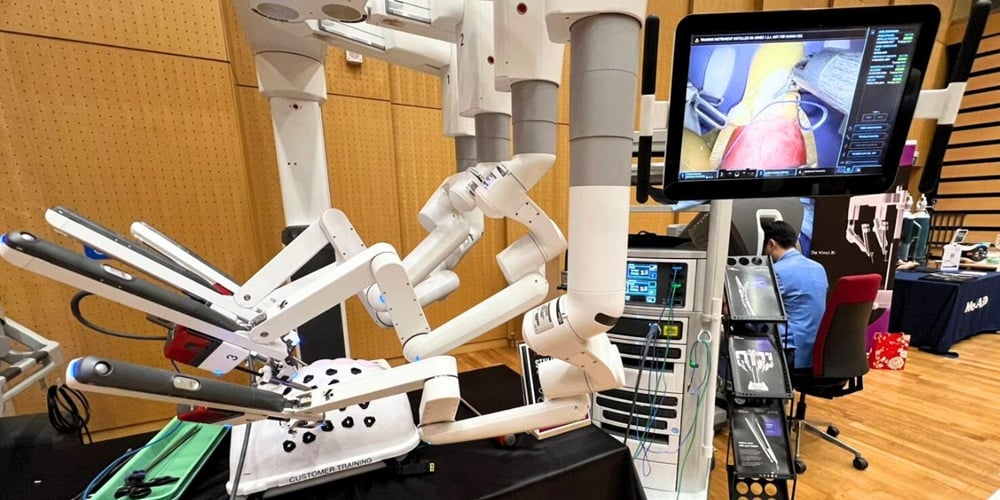
Traditional surgical training has long relied on animal cadavers. While these methods offer valuable anatomical experience, they also present significant logistical and ethical challenges. Today, high-fidelity simulation models provide an effective and scalable alternative. With their plug-and-play design, these models eliminate the need for complex infrastructure, enabling accessible robotic surgery training anywhere in the world.
These simulation models replicate human anatomy and tissue response with remarkable realism. This allows trainees to rehearse every step of a procedure with precision, while receiving real-time guidance from expert surgeons on the robotic system.
How is this technology being adopted worldwide?
Simulation-based robotic training is no longer limited to isolated initiatives—it is becoming a core component of surgical education across the globe. The following examples from London, Singapore, and Mexico highlight how institutions are integrating hyper-realistic models into hands-on sessions to enhance technical skills, improve precision, and reduce training barriers.
Multi-platform robotic training in London
Collaboration for GSTT radical prostatectomy course
In an innovative hands-on workshop held in London, participants trained on three leading robotic systems: Da Vinci, Hugo, and Versius. Surgeons performed critical steps of radical prostatectomy and partial nephrectomy on hyper-realistic models replicating organ-specific anatomy and vascularization. The flexible setup of these models allowed seamless integration across platforms, demonstrating their adaptability and the value of multiplatform training.

Uro-Oncology workshop in Singapore
The Singapore Urological Association recently hosted a Uro-Oncology Robotic Workshop where urologists practiced complex surgical procedures using UroTrainer’s simulation model. Participants rehearsed full procedures under the guidance of experienced mentors, focusing on precision, control, and anatomical accuracy.
Advanced robotic surgery course in Mexico
In collaboration with CyberRobotics and the Mexican Urological Society, six urologists completed a two-day advanced training course in Mexico. Using simulation models, participants performed partial nephrectomy and radical prostatectomy. Thanks to the models’ plug-and-play design, setup was quick and efficient, requiring minimal logistical support.

From innovation to standard practice
As robotic surgery continues to advance, so must our methods for training future surgeons. Simulation models are no longer supplementary—they’re becoming essential to surgical education. By enabling realistic, standardized, and accessible training, these models are redefining how surgeons learn and refine robotic techniques.
Institutions worldwide are increasingly adopting this approach, ushering in a new era of surgical training that is safer, more efficient, and more effective.
